
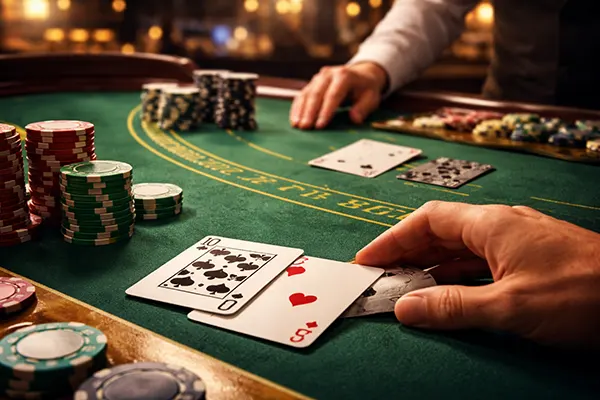
Blackjack Surrender Rule: When Giving Up Is Actually Profitable
Surrender is one of the most misunderstood options in blackjack because it feels like quitting. In reality, it’s a price you sometimes pay to avoid a bigger expected loss. When the table allows surrender, you can give up your hand immediately, lose half your stake, and move on—often improving your long-run results compared with playing out a very bad spot.
What “surrender” means in modern blackjack, and why the timing matters
In blackjack, surrender lets you forfeit your hand and recover half of your original bet. It only applies before you take any additional cards, and it is separate from standing, hitting, doubling, or splitting. The idea is simple: if your expected loss from playing normally is worse than -0.50 of your bet, surrender is the better financial choice.
In 2026, the most common form you’ll see is late surrender. With late surrender, you may surrender only after the dealer has checked for a natural blackjack (an Ace upcard with a peek, or a 10-value upcard in games that peek). If the dealer has blackjack, surrender is not allowed and you lose the full bet as usual.
Early surrender is rarer and far more valuable. It allows you to surrender before the dealer checks for blackjack, meaning you can surrender even against an Ace or 10-value upcard when the dealer might have blackjack. Because it reduces the house edge noticeably, early surrender is uncommon in most mainstream rule packages; when it does appear, it often comes with compensating restrictions elsewhere.
How to identify surrender at the table, and what rules silently change its value
The first practical step is confirming whether surrender exists at all and which type it is. Table signage usually states “Surrender” or “Late Surrender”, while some venues include it in a printed rules card. In online blackjack, it’s typically a button that appears before you act; if it never appears, the option is not available even if a help page mentions it.
Next, look for the rule set around dealer behaviour and blackjack checking. Whether the dealer hits soft 17 (H17) or stands on soft 17 (S17) shifts many borderline decisions, including a few surrender spots. The presence of a peek (common in many US-style games) also matters because it defines late surrender’s “after the check” timing and reduces certain risks compared with no-peek games.
Finally, note restrictions and side conditions: some games forbid surrender after splitting, some allow it only on the first two cards, and some limit it against certain upcards. These details sound minor, but they determine whether you can actually use surrender in the high-frequency situations where it is most relevant—hard totals against a strong dealer card.
When surrender is mathematically favourable: the core hands and the logic behind them
Surrender is a tool for ugly match-ups, not a routine button you press often. The classic example is hard 16 against a dealer 10 in a late-surrender game. If you play it out, you will bust often when hitting, and you lose heavily when standing because the dealer’s 10 is strong; the expected loss typically exceeds half a bet, so surrender becomes the better option.
Hard 15 against a dealer 10 is the next headline case. It is not as extreme as 16 vs 10, but it is still a situation where “playing normally” can be worse than giving up half. If you can surrender, you’re essentially choosing a controlled loss rather than letting the hand drift into a high-probability full loss.
Other surrender decisions depend on the exact rules and deck count. In some common multi-deck games, hard 16 against a dealer 9 can be a surrender candidate; in others, it’s better to hit. That’s why surrender is best treated as a small, rules-sensitive part of basic strategy rather than a universal shortcut.
Borderline surrender spots (and how rule differences flip the answer)
The biggest “it depends” factor is whether the game is single-deck, double-deck, or multi-deck, and whether doubling rules are generous. Fewer decks slightly change draw probabilities; certain totals become marginally better or worse, which can move a decision from “hit” to “surrender” or the other way around. If you rely on memorised rules without checking the game format, you’ll misapply surrender more often than you think.
Dealer rules also matter. H17 tends to strengthen the dealer slightly, which can make surrender marginally more attractive in a couple of close spots, while S17 does the opposite. The difference is not dramatic hand-to-hand, but over time it affects whether “half a bet” is the cheaper option in those thin, uncomfortable decisions around 15 and 16.
One more subtle point in 2026 blackjack offerings: many tables use continuous shuffling or very deep penetration rules that are not player-friendly. While that doesn’t directly change the basic expected value of a single surrender decision, it often comes bundled with other rule tweaks (like reduced double options or limited resplits). Those bundles change the overall strategy environment, so always judge surrender inside the full rules package, not in isolation.
How to use surrender responsibly: practical decision-making, bankroll impact, and common errors
Surrender works best when you treat it as a disciplined, pre-decided rule, not a mood-based reaction to a losing streak. If your game allows late surrender, you should already know the small set of hands where it’s normally correct and follow it consistently. The benefit is modest per hand, but it is real, and it comes from avoiding the worst expected losses.
From a bankroll perspective, surrender lowers volatility in the most punishing spots. Taking a controlled half-loss reduces the frequency of full losses, which can smooth your session results without changing the fact that blackjack is still a game with a house edge under typical conditions. In practical terms, surrender is not a way to “win back” money; it’s a way to lose less in specific situations.
In 2026, many players mix live dealer blackjack, RNG blackjack, and land-based tables, each with slightly different rules. That mix is where errors creep in. If you switch games without recalibrating, you’ll either surrender when you shouldn’t (giving away equity) or fail to surrender when it is the best move (accepting a larger expected loss).
Mistakes to avoid: insurance confusion, surrender misuse, and rule misreads
A classic mistake is blending surrender with insurance decisions. Insurance is a separate side bet offered when the dealer shows an Ace, and it has its own expected value. In late-surrender games, the dealer checks for blackjack first; if the dealer has blackjack, surrender won’t save you. That sequence matters: players sometimes think surrender protects them from dealer blackjack in all cases, and it doesn’t.
Another common error is surrendering hands that feel bad emotionally but aren’t mathematically worse than half a bet. For example, surrendering middling totals against weaker upcards because you “don’t like the spot” usually burns value. Surrender is not a general escape hatch; it’s a targeted tool for specific high-negative expectations.
Finally, misreading the rules is more common than people admit. “Surrender available” can still mean “not after splitting”, “not against an Ace”, or “only on the first decision”. Before you rely on surrender as part of your approach, confirm exactly when the option appears and when it disappears. If you can’t verify it quickly, default back to standard basic strategy and treat surrender as unavailable.
The most popular articles
-
 Blackjack Insurance: When It Makes Mathema...
Insurance in blackjack is one of the most misunderstood side decisions at …
-
 Double Double Bonus Video Poker: Who This ...
Double Double Bonus Video Poker has been around for years, yet it …
-
 Side Bets in Baccarat: A 3-Step Sanity Fil...
Side bets in baccarat are marketed as small add-ons, yet in practice …