
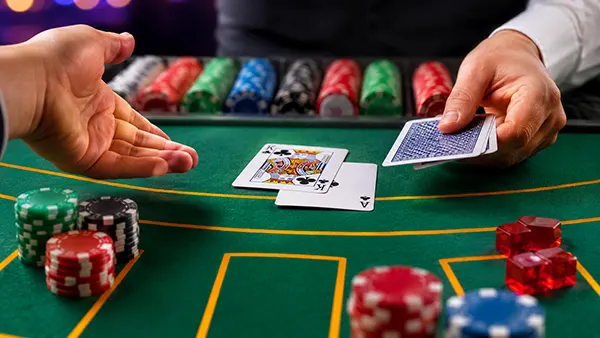
Why Poor Blackjack Table Rules Can Ruin Even Basic Strategy
Blackjack is often presented as one of the few casino games where player decisions genuinely influence long-term results. Many players learn basic strategy charts and expect this alone to reduce the house edge to a minimum. In reality, table rules have a direct effect on profitability, and poor rule combinations can turn a mathematically reasonable game into one that heavily favours the casino. By 2026, blackjack variations online and in land-based venues have become more diverse than ever, making it increasingly important to understand how rule changes affect expected returns.
Why Basic Strategy Depends on Table Conditions
Basic blackjack strategy is built on mathematical probabilities calculated under specific game conditions. These calculations assume fixed rules such as the number of decks, dealer actions on soft 17, doubling permissions, and payout structures. Once any of these rules changes, the expected value of many player decisions changes as well. A strategy chart designed for a traditional blackjack table may no longer be accurate under modern casino conditions.
One of the clearest examples is the difference between blackjack payouts. Traditional tables normally pay 3:2 for a natural blackjack, while many modern low-stakes tables offer only 6:5. At first glance, the change appears minor, yet it significantly increases the house edge. Even players who follow perfect strategy lose considerably more over time at 6:5 tables because the reduced payout damages one of the strongest winning situations in the game.
Another important factor is deck count. Single-deck blackjack generally provides better odds for players than six-deck or eight-deck games. However, casinos frequently compensate by adding stricter rules elsewhere, such as limiting doubling opportunities or increasing shuffle frequency. This means players cannot judge a table solely by one attractive feature without examining the full rule set.
How Casinos Use Rule Adjustments to Increase the House Edge
Casinos rarely rely on dramatic rule changes that players immediately notice. Instead, the house edge is often increased through several smaller adjustments combined together. Individually these changes may seem insignificant, but together they can substantially reduce player value.
One common example involves dealer behaviour on soft 17. When the dealer must stand on soft 17, the player has slightly better odds. If the dealer is required to hit soft 17, the house gains an additional advantage because the dealer has more opportunities to improve weak hands. Many online blackjack tables introduced this rule more aggressively after 2023, especially in live dealer environments targeting casual players.
Restrictions on doubling and splitting are another common tactic. Some blackjack tables only allow doubling on totals of 10 or 11, while others prevent players from resplitting aces. These limitations reduce flexibility and remove profitable situations that standard strategy normally relies on. As a result, even disciplined players experience weaker long-term performance despite making technically correct decisions.
The Most Dangerous Blackjack Rules Players Often Ignore
Many players focus entirely on bonuses, visual design, or minimum stakes while ignoring the rule information displayed on the blackjack table. Yet several overlooked rules can drastically alter expected returns. Understanding these hidden disadvantages is essential for anyone attempting to manage risk responsibly.
Continuous shuffle machines are a major concern in many physical casinos. These devices constantly reshuffle cards after each round, preventing any meaningful deck tracking and reducing the effectiveness of advanced techniques such as card counting. While casual players may not use professional counting systems, continuous shuffling still removes certain natural fluctuations that can occasionally favour players during normal gameplay.
Another issue involves side bets. Insurance, Perfect Pairs, 21+3, and similar features are heavily promoted in both online and live blackjack. Although these bets may appear entertaining, most carry a significantly higher house edge than the base game itself. Some side bets exceed 7% or even 10% house advantage depending on paytables. Frequent use of these optional wagers can destroy the relatively low-edge nature of blackjack.
Why 6:5 Blackjack Has Become One of the Worst Variants
The spread of 6:5 blackjack tables remains one of the most criticised developments in modern casino gaming. The reduced payout on a natural blackjack creates a measurable increase in casino advantage that cannot be overcome through standard strategic play.
Under traditional 3:2 rules, a £10 blackjack hand returns £15 in winnings. Under 6:5 rules, the same winning hand pays only £12. While the difference seems small on individual rounds, the mathematical impact becomes substantial over hundreds or thousands of hands. Analysts and gambling researchers continue to identify 6:5 blackjack as one of the least player-friendly mainstream blackjack formats available in 2026.
Low minimum stakes often make these tables attractive to inexperienced players. Casinos know many visitors focus more on affordability than on payout structures. Because of this, 6:5 blackjack is frequently positioned prominently in casino lobbies and online game lists. Players who do not check the payout details may unknowingly accept far worse odds than expected.
How to Identify Better Blackjack Tables in 2026
Finding favourable blackjack conditions requires more than selecting the first available table. Modern players should evaluate the complete ruleset before placing wagers. The strongest blackjack games typically combine traditional payouts with flexible player options and transparent game mechanics.
One of the most reliable signs of a better blackjack table is a 3:2 payout combined with dealer stand on soft 17 rules. Games that allow doubling after splits and permit resplitting aces are also generally more player-friendly. Although such tables may have slightly higher minimum bets, the long-term mathematical difference can justify the increased entry cost.
Players should also pay close attention to rule transparency online. Reputable casino operators usually publish complete blackjack conditions directly within the game information section. If rule details are hidden, unclear, or difficult to access, this may indicate less competitive game conditions. Regulatory oversight in the UK and European markets has improved by 2026, but rule quality still varies significantly between operators.
Why Understanding Rules Matters More Than Chasing Wins
Many blackjack losses are incorrectly blamed on bad luck when the real issue is poor game selection. A player using perfect basic strategy at a weak table may still face worse long-term odds than a casual player sitting at a more favourable game. This is why experienced blackjack players often spend considerable time comparing rules before joining a table.
Responsible bankroll management also depends on understanding table conditions. Higher house edge games produce faster bankroll decline and greater volatility. Players who ignore rule differences may incorrectly assume blackjack always offers similar odds regardless of format, which is no longer true across modern casino environments.
Blackjack remains one of the most strategic casino games available, but strategy alone cannot compensate for poor rules. Understanding payout structures, dealer behaviour, deck numbers, and betting restrictions allows players to make informed decisions instead of relying purely on assumptions. In 2026, careful table selection has become just as important as knowing when to hit, stand, split, or double.
The most popular articles
-
 AI Dealers in Blackjack and Baccarat in 20...
AI dealers have moved from experimental casino concepts to real products during …
-
 Earning Money Through Poker
Poker has gained immense popularity over the years, not only as a …
-
 Donk Betting in Modern Poker: When Betting...
For many years, a donk bet carried one of the least flattering …