
AI Dealers in Blackjack and Baccarat in 2026: How Autonomous Live Tables Work and How They Differ from Human Dealers
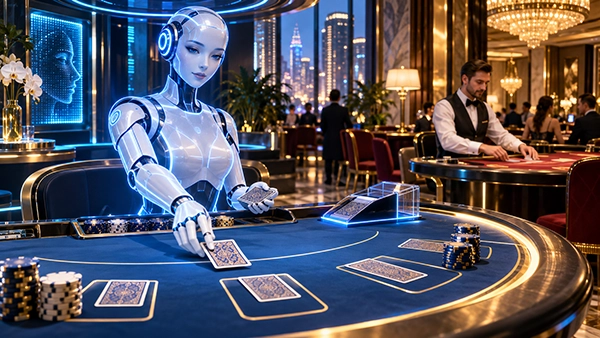
AI dealers have moved from experimental casino concepts to real products during 2026, especially in blackjack and baccarat. The change is more nuanced than replacing a human croupier with a talking computer character. Current systems combine several technologies: an independently controlled game engine, real-time graphics or a digital dealer, automated settlement and, in some cases, conversational artificial intelligence that can react to players. Products already available or demonstrated in 2026 show several different approaches. ICONIC21 introduced an AI-hosted RNG blackjack table, Sentient Studios has presented autonomous blackjack and baccarat experiences, while Avanti Studios uses lifelike digital dealer replicas for real-time casino games. At the same time, traditional live-dealer studios continue to expand. Understanding the difference matters because the appearance of the dealer does not tell a player how cards are generated, how a hand is settled or what fairness controls apply behind the screen.
What an AI Dealer Actually Means in 2026
The term “AI dealer” does not describe one standard type of casino game. In the simplest version, blackjack or baccarat remains an ordinary RNG-based table game, while an interactive digital character takes the visible role normally occupied by a croupier. The dealer can speak, react to a hand and sometimes remember previous conversations, but a separate game engine determines the cards and calculates the result. A second approach uses motion capture from professional human dealers to create realistic digital replicas whose movements can be rendered on demand. More advanced systems add language models, voice generation and player recognition so that the dealer can respond differently rather than repeating a fixed collection of recorded phrases. These formats may look similar on screen, yet the technology behind them can be very different.
One of the clearest examples arrived in May 2026 when ICONIC21 released iDealer Blackjack. It is a seven-seat RNG blackjack game with a real-time AI dealer created with RAVATAR technology. According to ICONIC21, the character is neither a conventional pre-recorded dealer nor a simple scripted animation. It can address players by nickname, react to the pace of the session and retain context from previous interactions. The important detail is that the product remains an RNG blackjack game at its core. The AI supplies the visible personality and conversation rather than choosing which card appears next. This distinction separates an AI host from the mathematical system responsible for the wager.
Other suppliers are taking different routes. Sentient Studios describes its products as autonomous AI dealer games and, by September 2026, presents blackjack and baccarat among the experiences available through its own demonstration pages. Avanti Studios has approached the same problem through motion capture, 3D animation and real-time rendering. Its dealer characters reproduce movements captured from experienced croupiers, while the underlying games use software-generated outcomes. During 2026 Avanti secured agreements involving regulated operators including Entain and bet365, with blackjack becoming an important part of its Spanish rollout. These examples show why “AI live casino” should not automatically be interpreted as a camera broadcasting a physical table. In some new products, “live” increasingly describes real-time interaction and multiplayer play rather than the physical presence of a human dealer.
What Happens During an Autonomous Round
A typical autonomous table separates the round into two layers that the player experiences as one continuous game. The first is the game itself. Once betting opens, the system records the stake and waits until the betting period closes. An RNG or another approved result-generation method supplies the cards according to the rules configured for that version of blackjack or baccarat. The second layer is presentation. The digital dealer announces the beginning of the hand, displays or appears to deal the cards, reacts to the current game state and communicates the result. The visual character therefore does not need to know the future cards in order to perform its role. It receives information from the game system and responds to events as they happen.
Blackjack requires more interaction because the first two cards do not normally complete the player’s hand. After the initial deal, the software must wait for actions such as hit, stand, double or split where the rules permit them. The AI dealer can recognise which stage the hand has reached, prompt the player when a decision is required and respond after the choice has been submitted. If another card is requested, the game engine supplies it from the same virtual shoe or deck sequence used for that round. A conversational dealer may comment on the action or answer a general question, but that conversation should remain separate from the mechanism selecting the cards. A believable voice and facial expression are presentation features, not evidence that artificial intelligence is deciding the hand.
Baccarat is easier to automate after the betting window closes because the player normally chooses a betting position rather than making repeated card decisions. In standard punto banco baccarat, the drawing rules determine whether Player or Banker receives a third card. Once the opening cards have been generated, those rules can be applied automatically without waiting for another gameplay decision from the customer. The AI dealer can then present the cards, announce totals and display the winning betting position. Digital versions can also recreate familiar visual elements such as card reveals, roadmaps and table statistics. What they cannot genuinely reproduce is the physical handling of cards from a real shoe unless a physical table is actually involved. An animated squeeze, for example, may imitate the presentation of a live baccarat table while the underlying result has already been generated by software.
AI Dealers and Human Dealers: The Practical Differences
The most fundamental difference is the source of the visible dealing process. On a conventional live blackjack or baccarat table, a real croupier works in a studio or casino environment while cameras transmit the action to online players. Physical cards, shoes and dealing procedures form part of the game. Optical recognition systems or sensors may read the cards and send the results to the betting interface, but the human dealer remains responsible for handling the equipment. With a fully autonomous AI table, there may be no physical cards and no staffed table behind the video window. The dealer is rendered digitally, while the cards are produced by the game software and shown through an animated interface.
This difference changes how easily a supplier can operate tables around the clock. A traditional studio requires trained dealers, supervisors, shift planning, cameras, secure gaming equipment and enough staff to keep tables operating through nights, weekends and busy periods. An autonomous table does not require a croupier to sit at every individual table. Additional tables can therefore be created without recruiting another dealer for each one, and different languages or visual styles can be offered more easily. Sentient Studios, for example, promotes extensive multilingual support, while several 2026 AI dealer projects emphasise the ability to customise the appearance and voice of a digital host. These are operational advantages rather than changes to the probability of winning.
Human interaction remains harder to reproduce. An experienced live dealer can notice unusual questions, adjust the natural rhythm of conversation, understand humour and deal with unexpected situations without every possible case being anticipated in software. Current AI dealers can respond quickly and consistently, but they can still misunderstand a message, give an awkward answer or repeat patterns that make their artificial nature noticeable. Memory features also create a different experience: an AI character may be designed to remember a nickname or previous conversation across sessions, whereas a human dealer serving hundreds of customers usually cannot provide that level of individual continuity. Neither approach is automatically superior for every player. One prioritises physical authenticity and genuinely human behaviour; the other prioritises availability, consistency and automated personalisation.
Why Blackjack and Baccarat Behave Differently
Blackjack is a demanding test for autonomous dealer design because the player’s decisions affect how the hand proceeds. The system has to recognise when insurance, doubling, splitting or another permitted action is available and give the player an appropriate amount of time to respond. Different blackjack versions can also use different numbers of decks, dealer rules and payout structures. A digital dealer therefore needs accurate information about the exact rules of the table it is hosting. It may appear to conduct the game conversationally, but the underlying software must enforce every available action consistently. If the table pays blackjack at one rate or requires the dealer to stand or draw under particular conditions, those rules should not change because of the dealer’s personality or interaction with a player.
Baccarat has a more predictable sequence once bets are closed. The customer usually selects Player, Banker, Tie or permitted side bets, after which fixed drawing rules determine the remainder of the hand. This makes baccarat particularly suitable for highly automated presentation. A digital dealer can concentrate on announcing results, revealing cards and maintaining the visual rhythm of the game rather than waiting for strategic decisions after every card. It also explains why several developers working on autonomous casino tables have included baccarat in their product plans. The repetitive structure gives designers room to concentrate on realistic animation, language support, table customisation and interaction without having to manage as many player-controlled branches as blackjack.
The difference becomes especially noticeable in the pace of play. A human dealer naturally introduces small variations while collecting cards, checking a hand, changing a shoe or communicating with a supervisor. An autonomous table can reproduce a highly consistent rhythm and remove many of these pauses. That does not necessarily make faster play better for the customer. A higher number of completed rounds can also mean that money is staked more frequently during the same period. Players should therefore treat speed as a design characteristic rather than an advantage in itself and make use of available spending controls, session information and breaks. The same principle applies to both blackjack and baccarat: changing the type of dealer does not remove the house advantage built into the rules of the game.
Fairness, Regulation and What Players Should Check
A realistic AI character says nothing by itself about whether a casino game is fair. Fairness depends on the underlying gambling system, the rules of the game, the licence under which it is supplied and the testing requirements of the relevant jurisdiction. If an autonomous blackjack or baccarat table uses an RNG, that RNG should be treated as the critical component because it determines the cards rather than the digital dealer. The visual character should receive the outcome and present it, not secretly modify it in response to who is playing, how much has been lost or what happened in previous rounds. Reputable regulated systems therefore separate game-result generation from the conversational and graphical features surrounding it.
Great Britain provides a useful example of how existing rules apply to new technology. The UK Gambling Commission’s Remote Gambling and Software Technical Standards were current in 2026 and require casino games using random outcomes to produce results that are acceptably random. The standards specifically prohibit adaptive behaviour that changes the probability of game outcomes during play. Licensed businesses must also provide game and RNG test results under the Commission’s testing requirements. Traditional live studios are covered by separate requirements intended to make dealer operations fair and independently auditable, including supervision, documented procedures and surveillance. An autonomous RNG table does not become a conventional live-dealer studio simply because its digital character looks realistic, so the precise regulatory treatment depends on how the actual game is constructed and supplied.
Players can make several practical checks without understanding the software in detail. The casino should identify its gambling licence, make the blackjack or baccarat rules available before play and clearly show relevant payouts and betting conditions. It should also be possible to tell whether the game uses a human live dealer, an RNG with an AI host or another digital dealer system. This distinction is particularly important when a game uses words such as “live”, “AI live” or “digital live”, because those descriptions are not always referring to the same technical arrangement. For blackjack, rules such as blackjack payouts, doubling conditions and dealer behaviour can materially affect the house edge. For baccarat, commission rules, tie payouts and side bets can change the mathematics. Those published conditions matter more to fairness than how lifelike the dealer appears.
Will AI Dealers Replace Human Live Dealers?
The evidence from 2026 does not support the idea that human dealers are disappearing. AI dealer suppliers are expanding, but major live-casino companies are also investing in new physical studios. Evolution opened another US live-dealer studio in Grand Rapids, Michigan, in May 2026, offering blackjack, baccarat and other games. Playtech continued expanding human-dealer operations during the year and, on 15 September 2026, announced Live from London with The Hippodrome Casino, including blackjack and baccarat broadcast from the venue. Playtech also launched dedicated bet365 live studios in Pennsylvania and New Jersey earlier in 2026. These developments show that operators still see substantial demand for games where customers can watch a real croupier handling physical equipment.
A more realistic direction is coexistence. AI tables can cover situations where a dedicated human studio would be expensive or difficult to maintain, such as lower-volume languages, customised tables or periods when demand changes sharply. Human tables can continue serving customers who value the physical cards, spontaneous dealer interaction and visible studio environment. Hybrid approaches add a third category. Avanti’s 2026 model, for example, uses movements captured from experienced croupiers to create digital dealer replicas, combining human performance with software-controlled delivery. ICONIC21 takes another route by adding a conversational AI character to an RNG blackjack game. The industry is therefore developing several distinct types of dealer rather than moving from one universal format to another.
For a player, the most useful question in 2026 is not simply whether a table claims to use AI. It is what actually determines the cards and what role the dealer performs. A human live table uses a real croupier and physical dealing process. A digital-clone system reproduces human movements through rendered characters. An AI-hosted RNG table uses software to determine the hand while an interactive character presents it. These formats can look increasingly similar, but their internal structure is different. None gives the player a mathematical advantage merely because the dealer is human or artificial. The important factors remain the published game rules, transparent information, independent testing where required, regulatory oversight and personal control over gambling expenditure. In 2026, AI has changed how blackjack and baccarat can be presented, but it has not changed the basic requirement that the result must be generated and settled according to clear, verifiable rules.
The most popular articles
-
AI Dealers in Blackjack and Baccarat in 20...
AI dealers have moved from experimental casino concepts to real products during …
-
 Earning Money Through Poker
Poker has gained immense popularity over the years, not only as a …
-
 Donk Betting in Modern Poker: When Betting...
For many years, a donk bet carried one of the least flattering …